More poems

Here are some more of my poems. These are all older ones.

I like to rip up paper
And crumple it in my hand
It’s an underrated occupation
But it’s one I understand

———–

A drop of rain
Falling
Reflects the sun

———–

2B

Is it best
To be a tree
Floating darkly in the wind,
To be a bird
Soaring on sunbeams,
To be a worm
Wriggling through the dark,
To be a cloud
Drifting blindly between extremes,
To be me
Lost in the cold
Or just to be
Mindless and alive?

———–

I watch the roses die.
I watch the leaves fall.
I watch the houses crumble.
Must I outlive them all?

© bardofupton 2018

Another poem

This is an old one, written many years ago:

your touch trails my skin
mapping the hills and valleys of my body
I tremble
flesh turning to liquid beneath your touch
but not liquid enough
you did not stir my ocean’s surface
any more than the merest breeze
and never even touched
the depths beneath

© bardofupton 2018

A poem I wrote

You hurt me,
and more than once,
not with a fist
or even a word,
but with your disregard,
treating me as without need or desire,
as a backdrop to your life,
as an object for your use,
as a cipher, a prop, a toy,

And I put up with it,
as if I deserved no more,
as if I could do no better,
as if love is enough without respect,

But it’s not,
and never has been,
and never will be.

However long it takes to learn the lesson
is time well spent
for a future
without you.

© bardofupton 2018

Not Waving but Drowning

I’ve always loved this poem by Stevie Smith. It speaks to something in me that’s often felt misunderstood, misinterpreted.

I was much too far out all my life
And not waving but drowning

When I first read this, I felt a sense of recognition, a feeling that I had been seen. I felt I knew what Smith was talking about when she wrote it, or, rather, that she had written it for me, about me, that she knew how I felt.

I felt known, in a way that I hadn’t previously.

For me, this is a poem about appearances, about the way people interpret one another. It’s about how two people can see the same thing, but understand it completely differently. It’s about how easy it is to misunderstand, to read something that isn’t there – it’s about how you never really know what someone else is thinking or feeling.

For me, the reason I love this poem is that I feel that Smith understands the way that a laugh can also be a scream, that you can smile while dying inside. That she understands the way you can spend so long hiding your true feelings that all anyone sees, all anyone knows, is the mask. And sometimes there was good reason to wear that mask initially; sometimes it was only having the mask that saved your life, but eventually the mask becomes a trap, locking you away from those you care about. And that’s when you end up like the man in the poem, where you’re begging for help  while everyone thinks you’re having the time of your life.

Bleak, huh? But it was a realisation that made me resolve to stop being that person, to destroy the mask and to learn to ask for help, or to accept it when offered. It’s still a work in progress, of course: childhood survival techniques are hard to shake, even when you know they don’t help any more.

[Edited to add Categories/Tags]

© bardofupton 2018
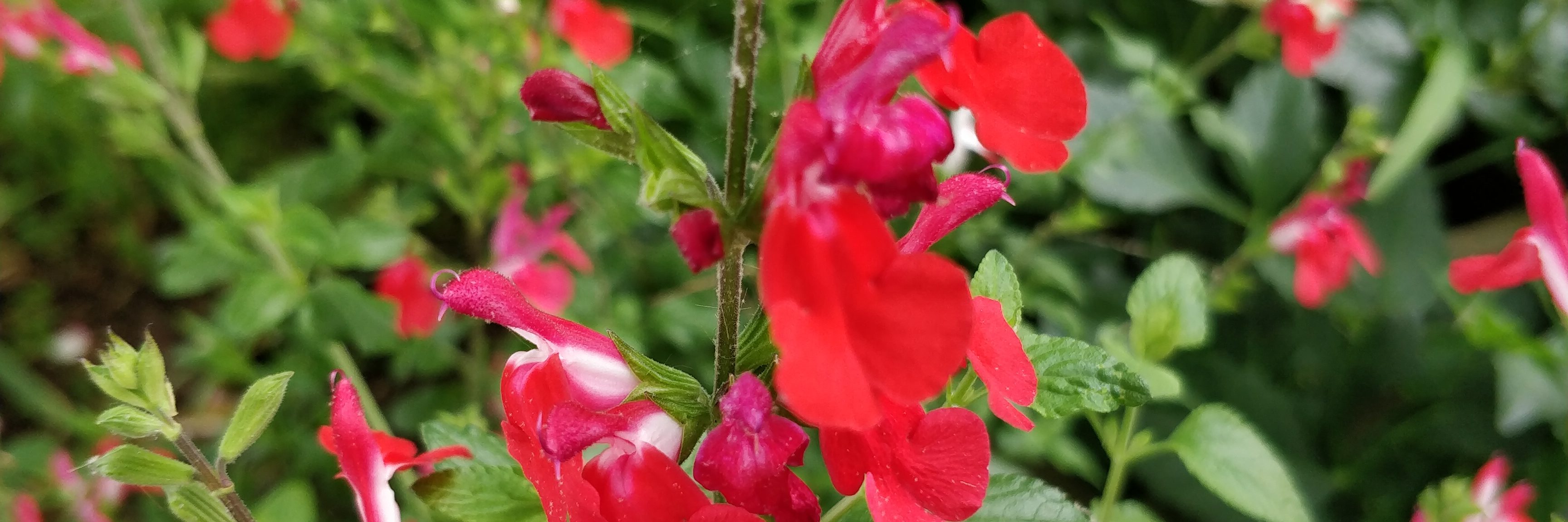
My favourite Terry Pratchett quote

The short version:

Sin, young man, is when you treat people like things. Including yourself. That’s what sin is.

And the full version:

“…And that’s what your holy men discuss, is it?” [asked Granny Weatherwax.]
“Not usually. There is a very interesting debate raging at the moment on the nature of sin. for example.” [answered Mightily Oats.]
“And what do they think? Against it, are they?”
“It’s not as simple as that. It’s not a black and white issue. There are so many shades of gray.”
“Nope.”
“Pardon?”
“There’s no grays, only white that’s got grubby. I’m surprised you don’t know that. And sin, young man, is when you treat people like things. Including yourself. That’s what sin is.”
“It’s a lot more complicated than that–“
“No. It ain’t. When people say things are a lot more complicated than that, they means they’re getting worried that they won’t like the truth. People as things, that’s where it starts.”
“Oh, I’m sure there are worse crimes–“
“But they starts with thinking about people as things…”
–from Carpe Jugulum, by Terry Pratchett.

Why do I love this? I think because it explains very simply something that I have long felt to be true: that is, how people can treat each other so badly. It’s about lack of empathy, and an inability to understand that other people are human too – are human first, in fact, and different second. And it’s a message that I think resonates very strongly right now.

© bardofupton 2018

Some thoughts on identity

I went to see a play today (April 11, 2018) called Scene about an interracial queer couple, and it got me thinking about identity.

About how long it took to start identifying as black/mixed race: because I grew up in a country where black and brown people were in the majority and were in positions of power, I had precisely the white Western experience that “people like me” are normal. Not that I didn’t know any white people – I did. I had white friends and family, but I was not aware of their race (or my own) as a thing. I just thought of them as people with different hair/skin to me, but not fundamentally different in any way. I certainly didn’t feel less than them, or that they thought of me as lesser. I had to move to the UK to have that particular experience. I’ve had to train myself to be aware of race, in a way that black people born in the UK probably don’t.

I identified as bisexual (these days I call myself queer) way before I started thinking of myself as black – and in fact I never did think of myself as black. I identify as mixed race, and I’m aware that other people think of me as black.  For me, black is something imposed on me from outside – much like I thought of my gender, back when I (sorta, kinda, well-if-you-push-me-then-I-guess-I’m-female?) identified as female. It was never how I felt, more how I knew other people saw me. Which is weird in its own way – I knew it wasn’t me, exactly, but I tried so hard to fit into the boxes that other people put me in.

Now I don’t care – or rather, I do care, I just know that being myself is more important than trying to conform. One of the few positives I can say about having had cancer is that it really makes you think about what matters to you. And what matters to me is being myself, and not trying to fit into other people’s boxes. My therapist called me brave, for (finally) realising my gender identity and acting on that, and I told her that it’s not bravery, it’s survival. I can’t pretend any longer. I can’t spend the rest of my life trying to meet other people’s expectations, because I have become suddenly strongly aware that the rest of my life might not be all that long.

And identifying as non-binary has been an amazingly freeing experience. I mean, there are a bunch of downsides, like legally my gender does not exist in the UK. But for the first time in my life, I have stopped worrying about whether I’m enough – do I meet the expectations for my gender. Because there really aren’t any. I get to decide what I look like, rather than having to try and look how someone else thinks I should. I don’t have to worry about being feminine enough – because that’s not me. It has been so relaxing.

© bardofupton 2018

Musings on gender and identity

An excerpt from an essay I wrote for a gender course. Some background for this:

This draws on various ideas about L’Écriture Féminine (Hélene Cixous) and also for certain stylistic aspects on an essay by Rachel Blau du Plessis called “For the Etruscans”.

And now… the essay! This is not a continuous excerpt from the essay, but more like the highlights. (In some ways this is a bit dated, but I feel still relevant.)

In writing bisexuality, we/you/I need a language that is more/other than oppositional….

I’m not defined by what I’m not, not defined against a norm (not as much), not defined against another way of being (I won’t let myself be). I want to be defined in combination, as this and this and this, not as this but not that. I want to remove binary opposition, at least in the language with which I describe myself (sexuality), because what I’m not (and there are things I’m not) doesn’t even have a name (monosexual?)…..

To be bisexual is linked (for me) to race, to a refusal to be either black or white  (why only ever two choices?) but to embrace all my parts. If I had not made this decision, did not know of my other selves (black, white, Asian), I would still be forcing myself to choose (gay/straight, black/white). Not cowardice, not denial, nor is it ignorance of the issues (although mostly they are theoretical/distant for me (and I realize again my privilege) but still real).

I am constantly qualifying myself (amplifying, negating, commenting upon) – everything I say is questionable (by me and by others). The language I use tempts me to say certain things, think, feel, do certain things, and I must query what I produce, a double consciousness (Du Bois) imperative for survival of (my) meaning. Nothing I say is simple (cannot be) – language conceals (I can only say words others have conceived) and I find I can write myself out of existence (following the mistakes of others) because I’m taught these things  (race/class/gender/sexuality) don’t exist (aren’t important) and I write myself as straight white man (I am not, must not be) ignoring my (true, real) self (selves). Following the myth of the universal (the simple). All my examples (models) were of someone else. Only now am I writing myself (in all its complexity) back into my work (I am beyond binary).

© bardofupton 2018


Hello world!

So I have finally decided to drag my website into the 21st century…

This is essentially a placeholder post while I decide what I am going to do with this site, but it will probably still be a collection of random stuff which I update when I feel like it!

© bardofupton 2018